
GENERAL PRESENTATION
The Festival du film de Knowlton / Knowlton Film Festival (FFKFF) aims to introduce the public to works and filmmakers from here and elsewhere. Its programming brings together international cinema that is often not easily accessible in Quebec with Quebec and Canadian films that marked the year. This meeting between cinematographies, perspectives and cultures is at the heart of its identity and nourishes a program guided by discovery, curiosity and exchanges between artists and the public.
Anchored in Lac-Brome and the Eastern Townships, the Festival favors proximity and meetings. Its bilingual character is fully in keeping with this regional reality and promotes dialogue between the French-speaking and English-speaking communities that shape the territory.
This regional anchoring is accompanied by programming that is resolutely open to the world, which allows the public to discover works that are still little broadcast in Quebec and rarely accessible outside major centers. In 2026, the Festival presented several Quebec and Canadian premieres (If I Go Will They Miss Me, Walter Thompson-Hernandez; Los Domingos, Alauda Ruiz de Azúa; Replica, Chouwa Liang), as well as premier films (Someone’s Daughter, Wiebke von Carolsfeld; La Place, Louis Godbout).
Since its relaunch in 2022, the FFKFF has experienced sustained growth and each year further asserts its place in the cinematographic and cultural landscape. Its 7th edition, in 2026, reached a new milestone with more than 6,000 spectators, 60 artists and 24 professionals and speakers, testifying both to the public’s attachment and to the growing interest of creators and professionals in the Festival.
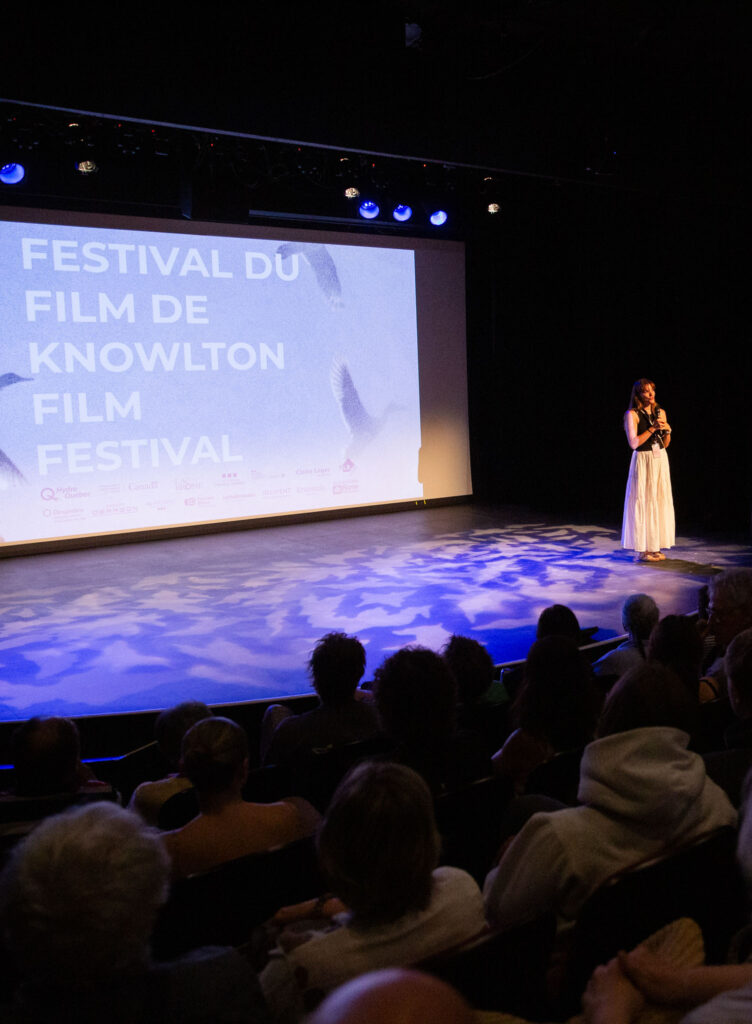
THE BILINGUAL CHARACTER OF THE FFKFF
The FFKFF also stands out for its bilingual character, like the community of Lac-Brome and the Eastern Townships in which it is deeply rooted. Its very name — Festival du film de Knowlton / Knowlton Film Festival — and its acronym FFKFF bear witness to this dual linguistic identity. The programming gives an important place to French and English-language films. The Festival also pays particular attention to subtitling in order to make works accessible to both linguistic communities and to allow French-speaking and English-speaking audiences to come together around the same programming. This desire to bring the two communities into dialogue constitutes one of the distinctive characteristics of the Festival. It is reflected in programming, meetings with artists, collaborations with organizations and institutions in the region, as well as in the development of projects such as the Cinema School with Bishop’s University.
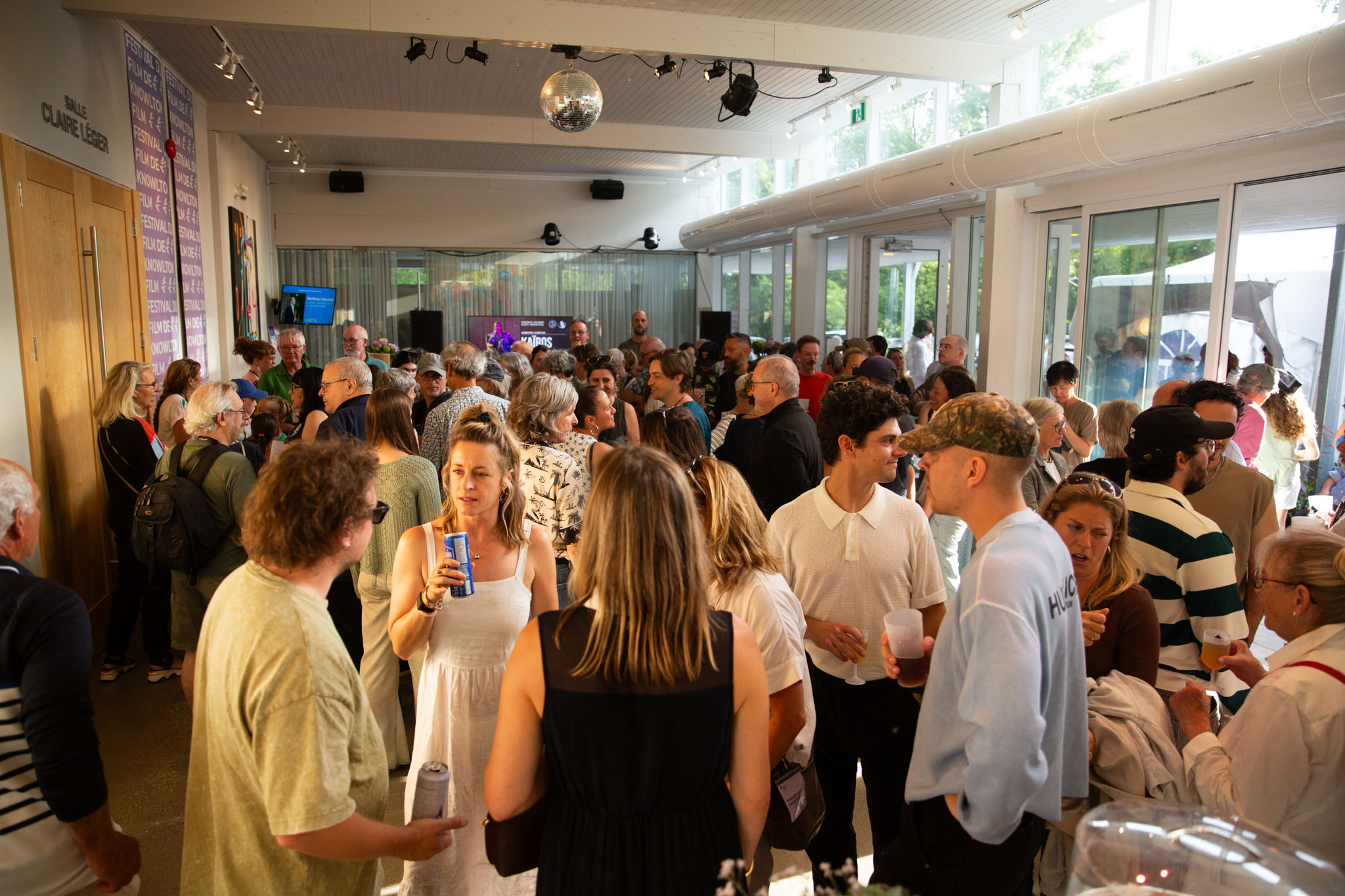
THE FESTIVAL, BEYOND THE SCREENINGS
The Knowlton Film Festival is not just about showing films. The meeting between the works, the filmmakers, the artists and the public constitutes one of the central elements of its identity. The screenings are accompanied by question-and-answer sessions and meetings which allow the public to interact directly with the directors, actors, screenwriters and artisans who come to present their films. To these exchanges are added master classes, film meetings, conferences and discussions which extend the experience of the works and allow us to address more broadly the artistic, social or professional issues they raise. This dimension of meeting continues throughout the week through several festive events, cocktails, informal meetings and musical evenings. The presence of live musicians during several events also contributes to creating an atmosphere where cinema, music and conviviality come together.
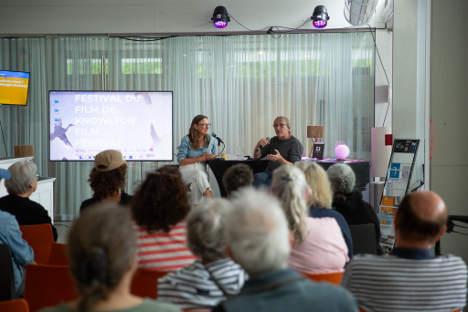
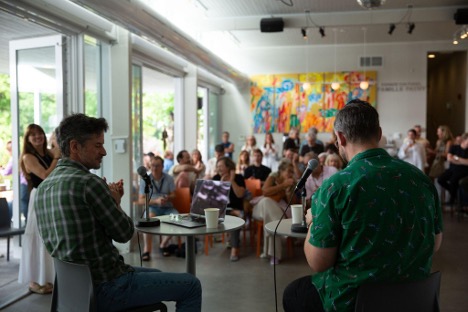
IMAGE EDUCATION AND SUPPORT FOR THE NEXT FUTURE
The Festival is gradually developing a real image education component aimed at young people and students, in collaboration with several school, university and cultural partners in the region. In 2026, the FFKFF created its first Film School in collaboration with Bishop’s University, hosted the second edition of its Lac-Brome cinema day camp and renewed for a second year its collaboration with the Sherbrooke Youth Symphony Orchestra around a film concert.
IMAGE EDUCATION AND SUPPORT FOR THE NEXT FUTURE
The Festival is gradually developing a real image education component aimed at young people and students, in collaboration with several school, university and cultural partners in the region. In 2026, the FFKFF created its first Film School in collaboration with Bishop’s University, hosted the second edition of its Lac-Brome cinema day camp and renewed for a second year its collaboration with the Sherbrooke Youth Symphony Orchestra around a film concert.
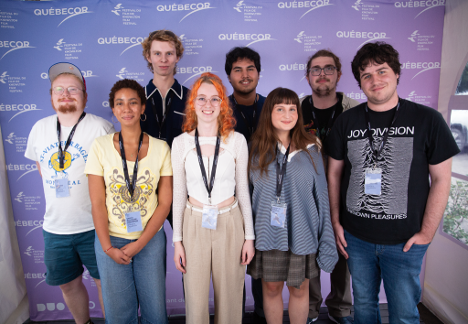
Film School — Bishop’s University
The first cohort brought together eight students at the start of their university career. Directly integrated into the life of the Festival, they attended screenings, participated in workshops and meetings and experienced a real immersion in the event. This experience was recognized by Bishop’s University as a credited activity in their university career.
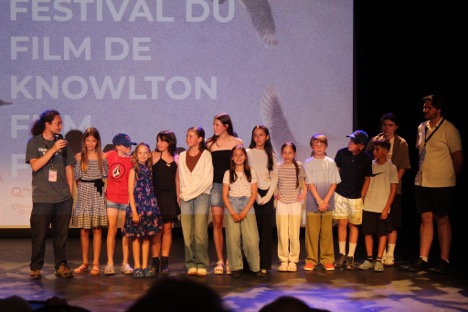
Cinema day camp — For a second consecutive year, young people from Lac-Brome participated in a full week of introduction to cinematographic creation, from the development of the project to the collective production of a short film. Their film was presented to the public just before the closing ceremony of the Festival.
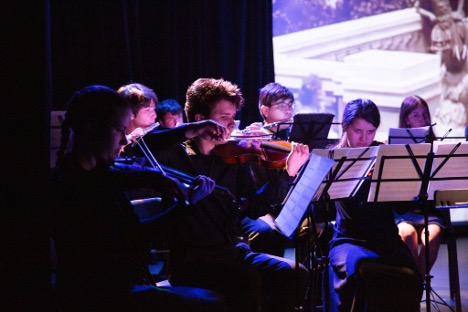
Cinema concert — For a second consecutive year, the Festival renewed its collaboration with the Sherbrooke Youth Symphony Orchestra around a film-concert format. In partnership with the composition program at the University of Sherbrooke, young composers have created original music specially designed to accompany silent cinema short films. These compositions were then performed live by the young musicians of the Orchestra during the projection. This formula brings together cinematographic heritage, contemporary musical creation and artistic training.
A professional aspect in full development
For several years, the Festival has been developing a professional component intended to encourage exchanges between filmmakers, producers, programmers, institutional representatives and stakeholders in cultural and regional development. In 2025, Telefilm Canada entrusted the Knowlton Film Festival with the responsibility of hosting a co-development meeting bringing together management of French-speaking festivals in Canada. This first experience contributed to the development of the FFKFF as a place of meeting and reflection for professionals in the field. In 2026, the Festival continued this development thanks to the support of the Franco-Québécois Fund for Decentralized Cooperation, as part of the partnership developed with Occitanie. The professional day “Cinema Territories — Eastern Townships × Occitanie” brought together professionals from cinema, tourism and regional development around issues related to cinema, festivals and filming in the region. The day included discussions on the essential role of theaters and festivals in the region, a round table devoted to the territory as a raw material for creation and a presentation of Studios B79 in Bromont. It was also an opportunity to highlight the launch of Films Cantons-de-l’Est, the region’s new cinema office, called upon to play a structuring role in the development and hosting of productions in the region.
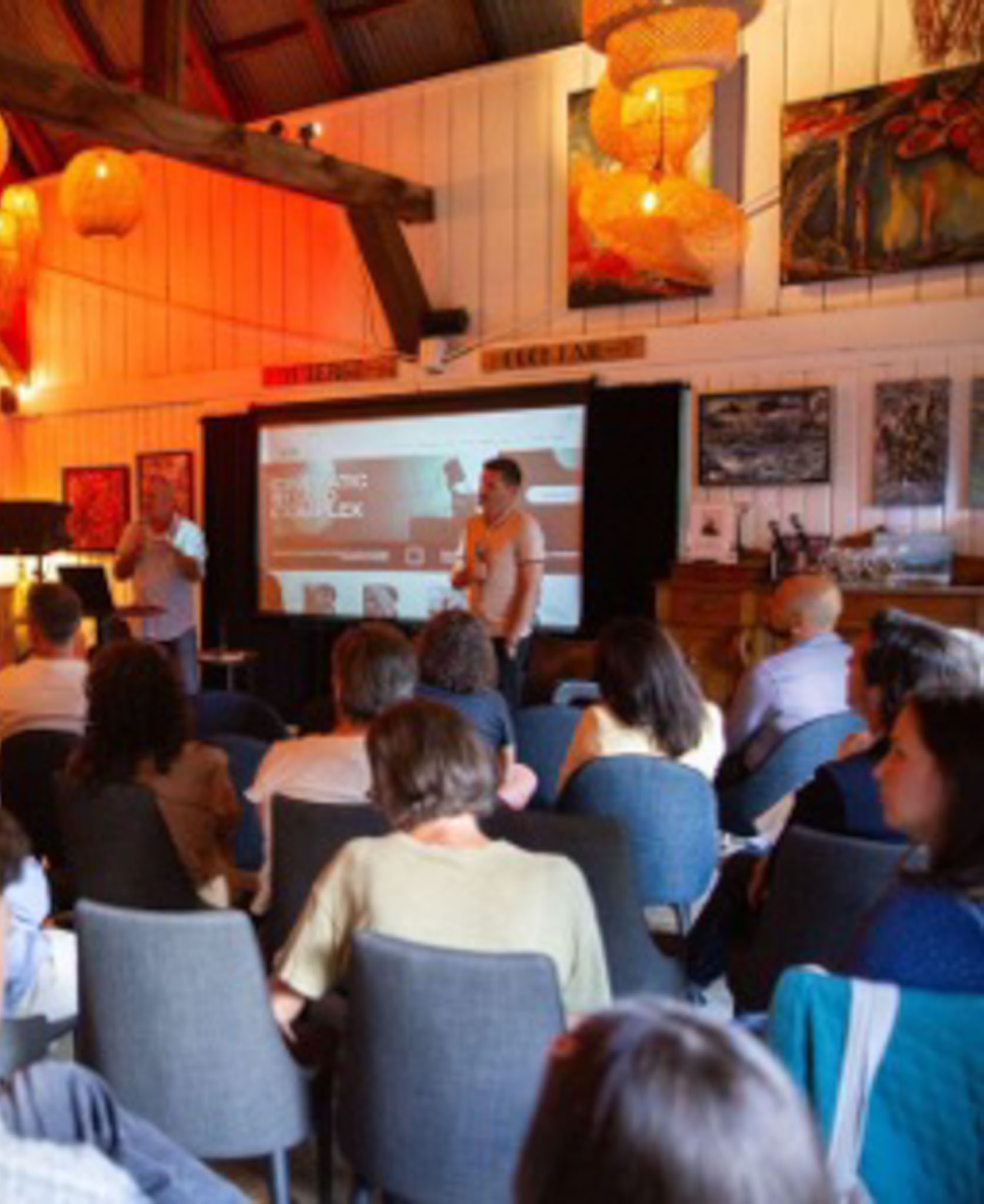
Cinema territories — August 21, 2026 Presentation of Studios B79 de Bromont by their founders Richard Cormier and Jérémie Santander, a new film studio project called to support the hosting of filming and the development of the regional audiovisual ecosystem, in front of an audience of professionals from the cinematographic, tourist and regional development sectors.
INTERNATIONAL PARTNERSHIPS: Links that circulate cinema from here and elsewhere
For several years, the Festival has been developing a network of international collaborations which contributes to both enriching its programming and promoting local cinema. For three editions, it has welcomed programmers and representatives of international festivals to Knowlton, invited in particular to sit on its juries: Orly Yadin, former general director of the Vermont International Film Festival (VTIFF); Claudia Puig, programming director of the Santa Barbara International Film Festival; Joe Cultrera, co-founder of the Salem Film Fest; Guillaume Sapin, founder and artistic director of the Festival Vues du Québec, in Florac, in Occitanie; Mike Perreault, director of the Maine International Film Festival and executive director of the Maine Film Center; and, in 2026, Steve MacQueen, executive director of the Vermont International Film Festival.
These exchanges find a natural extension in the programming: almost half of the films presented come from international sources, while the Festival works to promote the circulation of Quebec works beyond our borders. The links forged with New England have been particularly strengthened: in 2026, the Maine International Film Festival devoted a focus to Quebec cinema, notably with Kairos, I lost sight of the landscape and a selection of five short films. These collaborations help to circulate films, professionals and audiences on both sides of the border.
The Festival is also continuing a structuring collaboration with Occitanie, supported for two years by the Franco-Québécois Fund for Decentralized Cooperation (FFQCD). In 2026, it notably took the form of the reception of a French delegation and the professional day Territoires de cinéma – Cantons-de-l’Est × Occitanie, with the participation of Karim Ghiyati, director of Occitanie Films, as well as the cinema day camp. A partnership that allows the Festival to anchor its regional development in a network of exchanges that is increasingly open to the international.
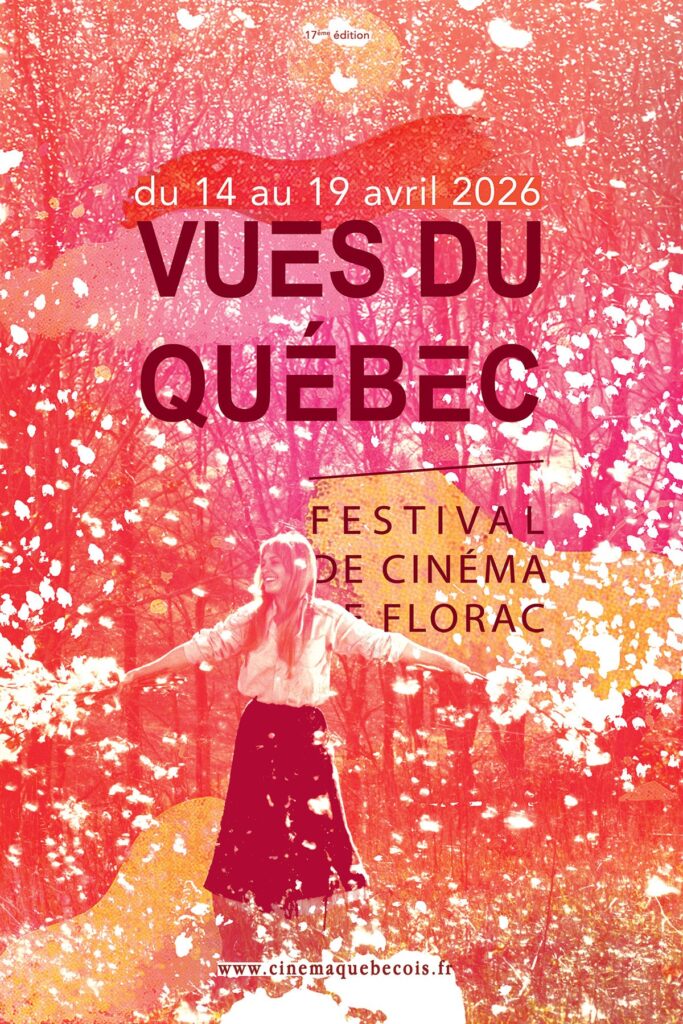
Vues du Québec Film Festival in Florac
For a second consecutive year, the Vues du Québec Film Festival in Florac joins the 7th edition through an exchange between Occitanie and the Eastern Townships. The program includes a screening in the presence of regional guests, followed by a discussion on the theme “Filming Locations and Territories of Creation”.
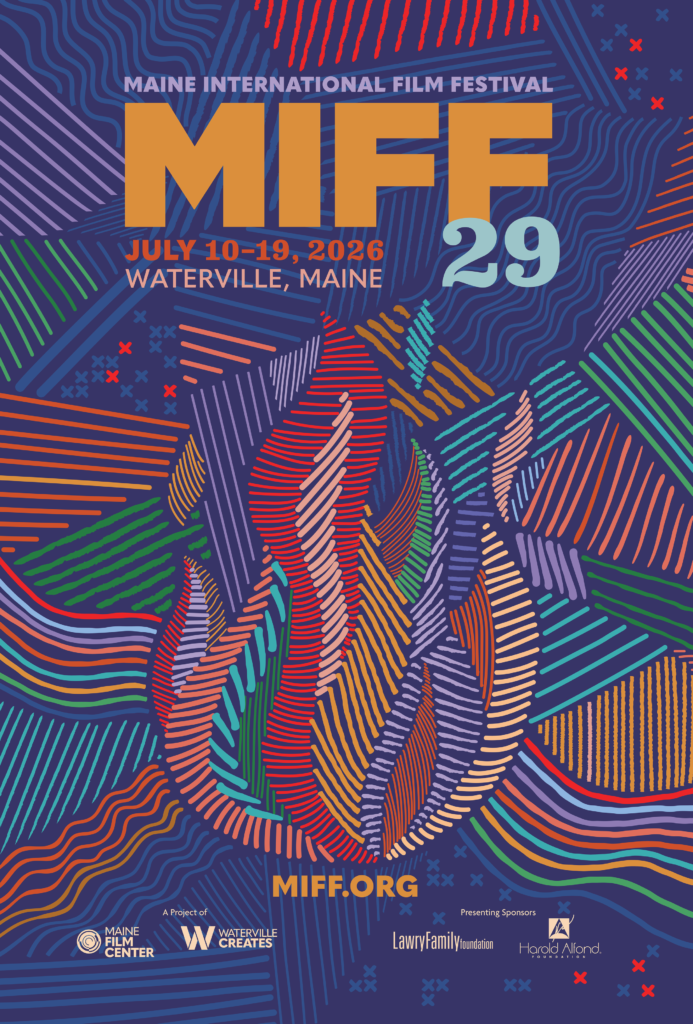
Maine International Film Festival
New partnership with the Maine International Film Festival (July 10–19). This summer, the Knowlton Film Festival will spotlight Quebec cinema through a dedicated focus featuring two feature films and five short films. In return, as part of this collaboration, the Maine International Film Festival will also be present in Knowlton with a special screening during the festival.
A FESTIVAL ANCHORED IN ITS COMMUNITY
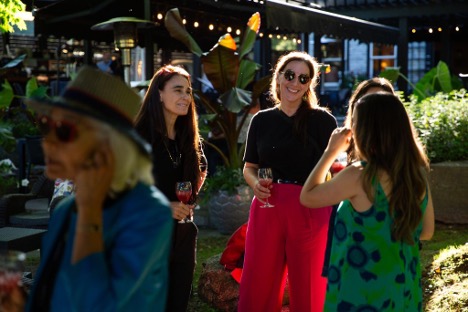
The development of the FFKFF is based on strong mobilization of the community of Lac-Brome and the Eastern Townships: local businesses, donors, artists, volunteers and residents participate directly in the life of the Festival. In 2026, around fifty volunteers contributed to welcoming the public and guests, ticketing, logistics and the smooth running of activities. For the first time, volunteers also participated in the guest shuttle service. Twelve residents of Lac-Brome and the surrounding area opened their homes to welcome artists, professionals and students, representing a total of 49 nights. The Festival also benefits from a significant commitment from the regional business community, in the form of financial contributions and donations of goods and services, as well as the support of private donors who play an essential role in its development. This anchorage is also reflected in the programming: artists, filmmakers, musicians and professionals from the Eastern Townships actively participate in the Festival, which wishes to act as a place of gathering, visibility and meeting for the regional film community.
Team
LAURENT BILODEAU
Head of Programming — Short Films programmation
ROXANNE BARBEAU
Graphic Designer
Board of Directors
JULIE BRADET
President
Co-founder of the production company Les Films Primatice, Julie has brought an ambitious vision to the Knowlton Film Festival, transforming it into an event that is increasingly popular with filmgoers. Supported by a dynamic team, she has devoted herself since May 2022 to developing a film festival for the Eastern Townships.
MADELEINE BÉLISLE
Madeleine has extensive experience in festival management and film marketing, notably at the National Film Board of Canada (NFB), where she worked from 1990 to 2011. As Director of the Festivals Office, she oversaw the programming of NFB films at international festivals, advised on launch strategies, and represented the NFB around the world. Madeleine also held senior positions in international sales and promotion at Cinéma Plus and the Montreal World Film Festival.
PASCALE BUSSIÈRES
Pascale Bussières has pursued an acting career in Canada and internationally, in both French and English, for more than forty years. Alongside her various professional projects, Pascale also explores several visual-art media, including cyanotype printing and textile sculpture. An actress, producer, film lover and FFKFF spokesperson since 2023, she actively contributes to the Festival’s profile and also serves on its board of directors.
MICHELINE BROCHU
Secretary
Secretary of the corporation since the Festival began, Micheline Brochu has lived in Lac-Brome for more than 15 years and has practised business law for 35 years. She has served as secretary and board member of several non-profit organizations, including the Théâtre de la Ligue nationale d’improvisation (LNI).
GISÈLE DALLAIRE
Treasurer
Gisèle Dallaire has held management and coordination positions in a variety of sectors. She was project manager for the Festival culturel des Maskoutains, cheesemaker and owner of La Fromagère Etcetera, and development officer for Au Cœur des Familles Agricoles. She also worked as a cheesemaker for Ruban Bleu. In addition to her food-sector experience, Gisèle held roles in web project management at Télé-Québec, IT coordination at ARTV, and computer training at Radio-Canada. She also ran her own teaching business, Info-Didact, for more than ten years.
JOANNE LEDUC
After beginning her career in publishing, first with Alain Stanké and Doubleday Canada, Joanne spent nearly 35 years at the National Film Board of Canada (NFB), where she served as Director of the International Program, overseeing the Paris, London and New York offices and the international distribution of NFB productions. She later served as Director General of Communications and Marketing, then as Director of Partnerships and Audience Development, where she led the creation and implementation of numerous international partnerships and collaboration agreements for the NFB, including with Brazil’s Ministry of Culture, National Geographic and Gaumont Pathé.
NICHOLAS PYNES
Former Executive and Artistic Director of Théâtre Lac-Brome for 29 years, he was notably the first to stage English-language productions there of plays by Michel Tremblay, Michel Marc Bouchard and Dominic Champagne. A pianist and musician, he also served on a TIFF jury in Toronto for film selection and has been a member of the board since the corporation was founded.
VALENTIN VERRIER
Currently Director of Events, Communications and Development for the Youth Media Alliance, he also served as Executive Director of Rendez-vous Québec Cinéma. He is also the co-founder of Welcome Aboard / Festival Courts d’un soir and now serves as president of the distribution company.
PAULE ROBITAILLE
Paule Robitaille is a Quebec lawyer, journalist, documentary filmmaker and politician. She was elected as the Member of the National Assembly for Bourassa-Sauvé under the Quebec Liberal Party banner in 2018. Before entering politics, she worked as a foreign correspondent, notably in Latin America and Moscow, then as a documentary filmmaker and a member of the Immigration and Refugee Board of Canada.